

What Does WYO Mean in Text?
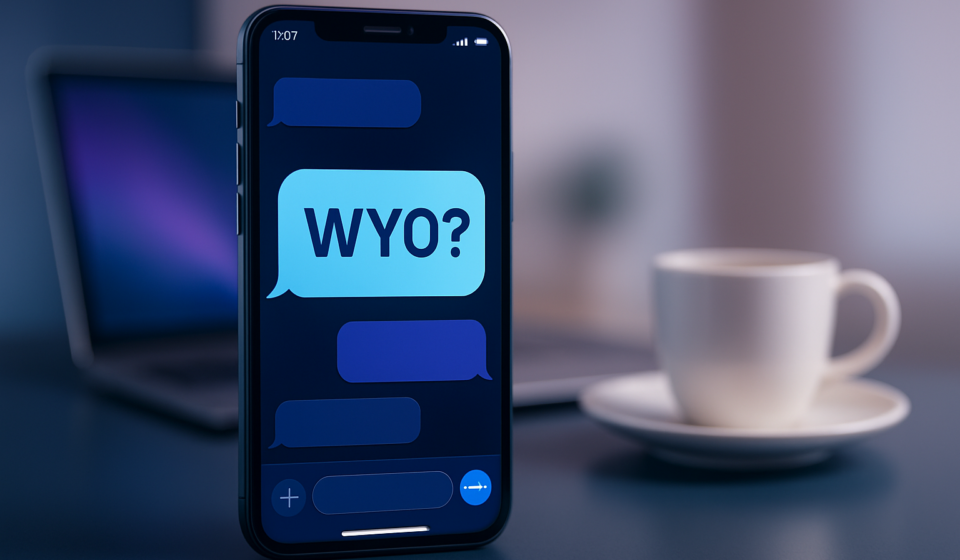
Ever received a message with the acronym “WYO” and found yourself frantically searching online for its meaning? You’re not alone. As digital communication evolves, new shorthand expressions emerge faster than many of us can keep up with. In today’s fast-paced messaging world, WYO stands for “What You On?” – a casual inquiry about what someone is doing, planning, or interested in at the moment.
Table Of Content
- What Does WYO Mean in Text?
- How Is WYO Used in Conversation? 🔍
- Friendly Check-In
- Flirtatious or Romantic Tone
- Suspicious or Confrontational
- The Nuances of Tone in ‘WYO’ 🧠
- When Should You Use or Avoid ‘WYO’? 🎯
- When to Use WYO
- When to Avoid WYO
- 15 Best Ways to Reply to ‘WYO’ 📲
- Polite, Professional & Casual Alternatives to ‘WYO’ 🔄
- Polite Alternatives
- Casual Alternatives
- Professional Alternatives
- How to Choose the Best Alternative 🗨️
- Why Knowing WYO and Its Variants Matters 💡
- Final Thoughts on ‘WYO’ Meaning and Usage ✨
This three-letter acronym has become increasingly popular across social media platforms, messaging apps, and even dating services. But understanding its meaning is just the beginning – knowing when and how to use it appropriately can make all the difference in your digital interactions.
- Basic meaning: What are you doing?/What are you up to?
- Secondary meaning: What are your plans?
- Implied meaning: Are you available to hang out?
- Contextual meaning: What substances are you using? (in certain social circles)
- Tone indicator: Often casual and friendly, but can vary dramatically based on context
How Is WYO Used in Conversation? 🔍
The acronym “WYO” appears simple on the surface, but its usage and implications can vary significantly depending on context. Let’s explore the three primary scenarios where you might encounter this acronym.
Friendly Check-In
In its most common and straightforward use, WYO serves as a casual way to check in with friends or acquaintances. It’s the digital equivalent of “What’s up?” or “What are you doing?” when you’re curious about someone’s current activities or availability.
Example:
Person A: Hey! WYO?
Person B: Just finishing up some work. Should be free in an hour if you want to grab food.
This usage is typically sent with the underlying intention of potentially making plans or continuing the conversation based on the recipient’s response.
Flirtatious or Romantic Tone
When sent between people with romantic interest, “WYO” often carries a flirtatious undertone. It can signal interest in the recipient’s plans with the implicit suggestion of spending time together.
Example:
Person A: WYO tonight? 😏
Person B: Nothing planned yet. What did you have in mind?
The addition of certain emojis, like the smirking face or heart eyes, can amplify the flirtatious intent behind the message.
Suspicious or Confrontational
In certain contexts, particularly when sent abruptly or between people with tension, “WYO” can take on a more confrontational tone. It might be used to question someone’s activities in a suspicious manner.
Example:
Person A: I saw your post from last night. WYO?
Person B: Just hanging with some friends from work. Why?
The tone here shifts from friendly inquiry to something closer to “What are you up to?” in the sense of “What are you doing that perhaps you shouldn’t be?”
The Nuances of Tone in ‘WYO’ 🧠
Several factors influence how “WYO” is perceived by the recipient:
- Timing: A “WYO” sent at 2 PM on a weekday suggests different intent than one sent at 11 PM on a Saturday night
- Relationship: The same message can be interpreted differently based on your established relationship with the sender
- Punctuation: “WYO” versus “WYO?” versus “WYO!” versus “wyo…” all convey different emotional tones
- Accompanying emojis: These visual cues significantly modify the perceived tone
- Message history: Previous conversations provide crucial context
| Tone | Intent | Example |
|---|---|---|
| Casual | Friendly check-in | “Hey! WYO?” |
| Suggestive | Flirtatious invitation | “WYO tonight? 😉” |
| Demanding | Expecting a response | “WYO. Need to talk.” |
| Suspicious | Questioning activities | “Saw your location changed. WYO?” |
| Bored | Seeking entertainment | “I’m so bored… WYO?” |
When Should You Use or Avoid ‘WYO’? 🎯
Understanding when to use or avoid “WYO” can help prevent communication mishaps and ensure your message is received as intended.
When to Use WYO:
- ✅ With close friends or peers who use similar slang
- ✅ In casual, personal conversations
- ✅ When looking to make spontaneous plans
- ✅ In text messages or social media DMs
- ✅ When you want to keep the conversation light and informal
When to Avoid WYO:
- ❌ Professional communications (work emails, messages to professors)
- ❌ Formal requests or important discussions
- ❌ When communicating with people unfamiliar with current slang
- ❌ Situations where clarity is critical
- ❌ When speaking with significantly older generations who may misinterpret
15 Best Ways to Reply to ‘WYO’ 📲
When someone sends you “WYO,” your response options are virtually limitless. Here are 15 effective replies for different scenarios:
- Direct Response: “Just finishing up work. You?” (Perfect for straightforward communication)
- Making Plans: “Nothing much. Want to hang out?” (Opens the door for activities)
- Busy But Interested: “Swamped with deadlines until 7, free after though!” (Sets boundaries while showing interest)
- Playful Evasion: “Wouldn’t you like to know? 😏” (Adds flirtatious mystery)
- Sharing Activities: “Binging the new season of [show]. Have you seen it?” (Shares interests and invites conversation)
- Location-Based: “At the coffee shop on Main. Join me?” (Direct invitation)
- Mood Sharing: “Just chilling, feeling pretty relaxed today.” (Focuses on emotional state)
- Future Plans: “Planning my weekend trip to the mountains!” (Shares upcoming events)
- Need-Based: “Looking for food recommendations actually!” (Turns the question into an opportunity)
- Group Activity: “Heading to Jake’s party later with the crew.” (Implies possible inclusion)
- Honest Unavailability: “Family dinner tonight, can’t escape 😅” (Sets clear boundaries)
- Returning the Question: “Not much. WYO?” (Simple reciprocation)
- Productivity Share: “Working on my side project. Made some progress!” (Shares accomplishments)
- Open-Ended: “Open to suggestions! What did you have in mind?” (Places ball in their court)
- Status Update: “Just got home, about to make dinner.” (Provides timeline context)
Polite, Professional & Casual Alternatives to ‘WYO’ 🔄
While “WYO” works well in casual settings with peers, you’ll need alternatives for different contexts and audiences.
Polite Alternatives
- “What are you up to today?”
- “How is your day going so far?”
- “Are you busy at the moment?”
- “Do you have plans for [time period]?”
- “I was wondering what you’re doing right now.”
Casual Alternatives
- “What’s up?”
- “Whatcha doing?”
- “Plans?”
- “Busy?”
- “WUWTA” (What Up With The Activities)
Professional Alternatives
- “Are you available for a discussion?”
- “Would you have some time to connect today?”
- “I was hoping to catch you – is this a good time?”
- “What does your schedule look like today?”
- “I’d like to discuss [topic] – when might be convenient for you?”
How to Choose the Best Alternative 🗨️
Selecting the most appropriate alternative to “WYO” depends heavily on your relationship with the recipient and the context of your conversation.
| Situation | Best Alternative |
|---|---|
| Messaging your boss | “Do you have a moment to discuss [topic]?” |
| Texting a new acquaintance | “What are you up to this weekend?” |
| Messaging a close friend | “What’s up?” or “Plans?” |
| Work colleague during office hours | “Are you available for a quick chat?” |
| Family member | “How’s your day going?” |
| Dating app conversation | “Any exciting plans for the weekend?” |
Why Knowing WYO and Its Variants Matters 💡
Understanding modern text slang like “WYO” is more than just keeping up with trends – it’s about digital literacy in an increasingly text-based world: Decoding modern text slang not only enhances communication but also fosters connections across different generations and cultures. As language evolves in digital spaces, being adept at these shorthand expressions can help bridge gaps in understanding. Embracing this form of communication cultivates a sense of belonging in an era where interactions are often mediated through screens. understanding the meaning of wys opens up new avenues for interpreting digital dialogues. This awareness not only enriches personal conversations but also equips individuals with the tools to navigate online interactions with confidence. Being fluent in these evolving expressions is essential for fostering effective communication in a diverse digital landscape. Understanding wtw usage guidelines can further enhance clarity and intention in conversations. As users become more familiar with these guidelines, they’re better positioned to engage meaningfully with others, ensuring that their messages are received as intended. This proficiency in digital shorthand not only streamlines communication but also enriches the overall online experience for everyone involved. As we look ahead to text slang trends for 2026, it’s crucial to anticipate how these expressions will shape interactions in various digital realms. New forms of communication are likely to emerge, reflecting cultural shifts and technological advancements. Staying ahead of these trends can empower individuals to connect more deeply and authentically in an ever-evolving landscape.
- Communication Efficiency: Text acronyms like “WYO” streamline conversations, allowing for quicker exchanges in a fast-paced digital environment.
- Cultural Relevance: Familiarity with current slang helps bridge generational gaps and connects you to contemporary communication styles.
- Avoiding Misinterpretation: Without proper context, messages can be misunderstood – knowing the nuances of terms like “WYO” prevents communication breakdowns.
- Digital Etiquette: Understanding when and where certain expressions are appropriate demonstrates your awareness of online social norms.
- Relationship Building: Appropriate use of casual language can strengthen connections with peers while knowing when to use more formal alternatives shows respect in professional relationships.
As digital communication continues to evolve, staying informed about emerging slang and acronyms helps ensure your messages are received as intended across various social contexts. one area to keep an eye on is modern messaging trends for 2026, as these will likely influence how individuals express themselves online. Adapting to new platforms and communication styles will be essential for effective interaction in both personal and professional environments. Being aware of these trends can also enhance your ability to connect with diverse audiences, ensuring your messages resonate with different groups.
Final Thoughts on ‘WYO’ Meaning and Usage ✨
The acronym “WYO” exemplifies how language adapts to technological changes and social needs. What began as a simple abbreviation has developed layers of meaning influenced by context, relationship dynamics, and communication platforms.
While “WYO” thrives in casual, peer-to-peer interactions, understanding its limitations is equally important. The key to effective communication – whether digital or in-person – lies in matching your language to your audience and situation.
As you navigate the ever-changing landscape of digital communication, remember that expressions like “WYO” are tools in your conversational toolkit. Use them thoughtfully, with awareness of how they might be perceived by different audiences.
Whether you’re reaching out to make plans with friends, checking in with a potential romantic interest, or simply curious about someone’s day, knowing how to use and respond to “WYO” adds another dimension to your digital communication skills.
The next time you see those three letters pop up on your screen, you’ll not only understand what they mean but also the social nuances they carry – and have a thoughtful response ready to keep the conversation flowing naturally.
And if you’re ever in doubt about using “WYO” in a particular situation, remember that clarity trumps brevity. When uncertain, opt for a more explicit alternative that leaves little room for misinterpretation, especially in professional or formal contexts.