


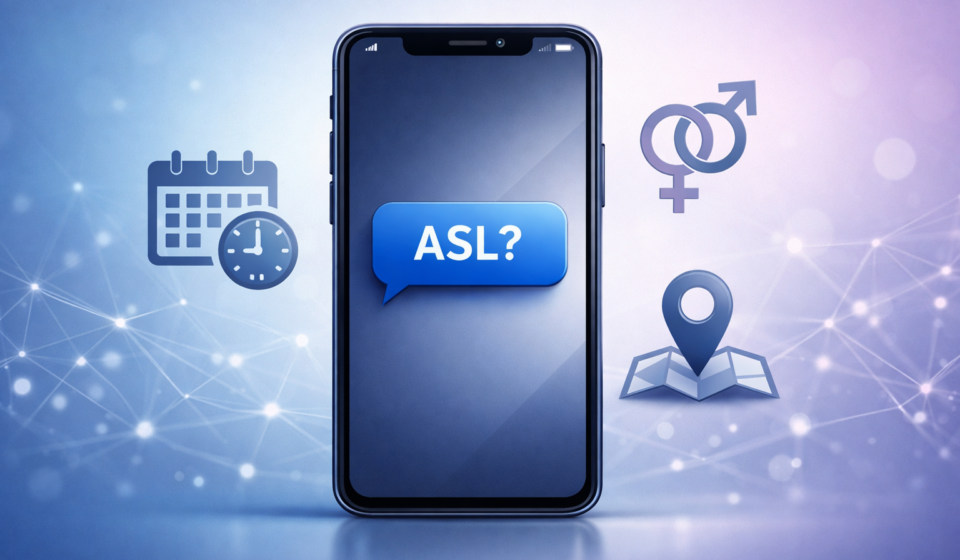
What Does ASL Stand For in Text?
In the realm of online messaging and texting, “ASL” is an abbreviation that stands for “Age, Sex, Location.” This three-letter acronym emerged in the early days of internet chat rooms as a quick way to establish basic demographic information about the person on the other end of the conversation. While seemingly innocuous, understanding the nuances of this abbreviation is crucial for navigating digital communication safely and effectively.
Table Of Content
- What Does ASL Stand For in Text?
- The Origin of ASL in Digital Communication
- Why It’s Important to Understand the Tone and Context of ASL
- Platform Considerations
- Relationship Familiarity
- Cultural Awareness and Regional Differences
- Privacy and Safety Considerations
- What ASL Does Not Mean (And Why It Matters)
- Alternatives to Using “ASL” in a Polite, Casual, or Professional Tone
- Polite Alternatives
- Casual Alternatives
- Professional Alternatives
- How to Respond to “ASL?” Gracefully
- Polite Responses
- Casual Responses
- Professional/Reserved Responses
- When Not to Respond to “ASL?”
- The Evolution of ASL in Modern Chat Culture
- Why You Should Be Mindful of Abbreviations Like ASL in Texting
- Contextual Comparison Table (ASL Usage Across Platforms)
- Frequently Asked Questions (FAQ)
- Is asking “ASL” considered rude in 2026?
- How should teenagers respond if asked “ASL” online?
- What are current alternatives to “ASL” in online communities?
- Does “ASL” mean different things in different countries?
- Conclusion: Navigating Digital Communication with Awareness
The context in which “ASL” appears dramatically affects its interpretation and appropriate response. What might be perfectly acceptable in a casual gaming chat could be considered inappropriate or unprofessional in a work-related message or on professional networking platforms.
The Origin of ASL in Digital Communication
The term “ASL” gained popularity in the 1990s with the rise of America Online (AOL) chat rooms, Internet Relay Chat (IRC), and early instant messaging platforms like MSN Messenger. During this time, internet users were genuinely curious about who they were talking to in these anonymous digital spaces.
In those early internet days, users would often initiate conversations with “ASL?” as a standard greeting. It was considered a normal part of establishing a basic profile of your conversation partner before deciding whether to continue the interaction.
As one early internet user recalls: “When you entered an AOL chat room in 1997, ‘ASL?’ was usually the first thing you’d see. It was just the standard way to break the ice before social media profiles existed.”
Why It’s Important to Understand the Tone and Context of ASL
The appropriateness of using or responding to “ASL” varies significantly based on several contextual factors:
Platform Considerations
Different digital platforms have different communication norms:
- Dating Apps: Basic demographic information is usually already provided in profiles, making “ASL” redundant and potentially signaling unfamiliarity with platform norms.
- Gaming Platforms: In gaming communities, “ASL” might be used more casually to form teams or find players of similar demographics.
- Professional Networks: On LinkedIn or work Slack channels, “ASL” would be considered highly inappropriate and unprofessional.
- Anonymous Forums: On platforms like Reddit or certain chat rooms, users might still use “ASL” to gather basic information, though it’s becoming less common.
Relationship Familiarity
The existing relationship between communicators greatly affects how “ASL” is perceived:
- Between strangers, it might come across as intrusive or suspicious, particularly if asked immediately.
- Among acquaintances who have just met online, it might be seen as an attempt to establish basic common ground.
- Between established friends, it would seem unusual and potentially confusing.
Cultural Awareness and Regional Differences
Digital communication norms vary significantly across different cultures and regions:
- In some countries, sharing personal information quickly is more normalized than in others.
- Younger users may be less familiar with “ASL” as it has become somewhat outdated in many communities.
- Some cultures place greater emphasis on privacy and would consider direct questions about personal details impolite.
Privacy and Safety Considerations
In today’s digital landscape, privacy awareness has evolved significantly since the early chat room days:
- Modern internet users are generally more cautious about sharing personal information.
- Being asked for age, sex, and location early in a conversation might raise red flags about potential malicious intent.
- Parents and educators now actively discourage young people from responding to “ASL” requests from strangers.
What ASL Does Not Mean (And Why It Matters)
It’s important to clarify that in text conversations, “ASL” typically refers to “Age, Sex, Location” and not American Sign Language, which shares the same acronym. This distinction is crucial for avoiding misunderstandings, especially in contexts where both meanings could be relevant.
For example, in an educational setting or healthcare communication, “ASL” would more likely refer to American Sign Language. In a casual chat or dating app, it almost certainly refers to “Age, Sex, Location.”
Additionally, in specific contexts, ASL might have other meanings:
- “As hell” in very casual slang (though this usage is less common)
- “Always” in certain gaming communities
- A misspelling of “as well”
Recognizing these potential variations helps prevent miscommunication and ensures appropriate responses.
Alternatives to Using “ASL” in a Polite, Casual, or Professional Tone
Polite Alternatives
Instead of abruptly asking “ASL?,” consider these more thoughtful approaches:
- “I’d love to know a bit more about you if you’re comfortable sharing.”
- “Would you mind telling me a little about yourself?”
- “I’m [age] from [location]. What about you?” (modeling the information you’re seeking)
- “How long have you been interested in [shared topic]?” (focusing on common interests first)
Casual Alternatives
For more relaxed conversations where basic information exchange seems appropriate:
- “Where are you messaging from?”
- “Have you been into [shared interest] for long?”
- “What time zone are you in?” (a practical way to establish location without seeming intrusive)
- “What’s your gaming background?” (in gaming contexts)
Professional Alternatives
In work-related or networking contexts, focus on relevant professional information:
- “Could you tell me a bit about your professional background?”
- “What industry are you currently working in?”
- “How did you become interested in [professional topic]?”
- “What time zone are you working from?” (when coordination across locations is necessary)
How to Respond to “ASL?” Gracefully
When faced with an “ASL?” question, you have several options depending on your comfort level and the context.
Polite Responses
If you’re comfortable sharing but want to maintain a respectful tone:
- “I’m [age], [gender], from [general location]. What about yourself?”
- “I’m in my [age range] and based in [region/country]. How about you?”
- “I’m [partial information] but prefer to chat a bit more before sharing more details.”
Casual Responses
In appropriate casual settings where you feel safe:
- “[Age]/[Gender]/[General location]. You?”
- “I’m a [age]-year-old [gender] from [location]. What brings you to this chat?”
- Redirecting with humor: “Old enough to know better, [gender], somewhere with internet access 😊 More interested in talking about [topic]!”
Professional/Reserved Responses
When maintaining professional boundaries is important:
- “I prefer to keep conversations focused on [professional topic/purpose of communication].”
- “I don’t typically share personal information in professional settings, but I’d be happy to discuss [relevant topic].”
- “I’m based in [time zone/general region] for scheduling purposes. How can I help with [business matter]?”
When Not to Respond to “ASL?”
In some situations, it’s advisable not to respond to an “ASL?” inquiry at all:
- When it feels suspicious: If the question comes very early in a conversation with no context or seems inappropriately focused on personal details.
- When communicating with minors: Adults should never ask children or teenagers for this information. Young users should be taught not to respond to such requests.
- When the platform norms don’t support it: On professional networks or work-related communications, this question is often inappropriate.
- When you have privacy concerns: You’re never obligated to share personal information online.
Safety experts recommend exercising caution, particularly when:
- The question comes from a completely anonymous profile
- The account appears newly created
- The person has no visible connection to your social networks
- The conversation has an uncomfortable tone
The Evolution of ASL in Modern Chat Culture
The usage of “ASL” has evolved significantly since its inception in the 1990s:
In the early internet era (1990s-early 2000s), “ASL” was ubiquitous in chat rooms and instant messaging. It served a practical purpose when users had little information about who they were talking to.
During the social media transition (mid-2000s-early 2010s), as profiles became more detailed and often included basic demographic information, “ASL” began to decline in mainstream usage. Platforms like Facebook, which required real names and profile information, reduced the need for such direct questioning.
In today’s digital landscape (2020s), “ASL” has become somewhat of a digital relic. Its usage now often signals either:
- Nostalgia for early internet culture
- Unfamiliarity with current digital communication norms
- Participation in specific communities where it remains common
- In some cases, potential red flags about a user’s intentions
Among Gen Z users, the term is sometimes used ironically or as a reference to “vintage” internet culture, similar to how younger users might playfully use outdated slang.
Why You Should Be Mindful of Abbreviations Like ASL in Texting
Understanding internet abbreviations like “ASL” isn’t just about staying current with slang—it’s about digital literacy and communication etiquette:
- Impression management: Using outdated or inappropriate internet shorthand can create negative impressions about your digital literacy or intentions.
- Context awareness: What’s acceptable in one digital environment may be completely inappropriate in another.
- Privacy boundaries: Being thoughtful about what personal information you request or share protects both yourself and others.
- Generational differences: Different age groups have vastly different experiences with and expectations of digital communication.
Digital communication experts recommend developing a nuanced understanding of context-appropriate language rather than relying on one-size-fits-all approaches to internet abbreviations.
Contextual Comparison Table (ASL Usage Across Platforms)
| Platform | Appropriateness of ASL | Alternative Approach |
|---|---|---|
| Dating Apps | Low to Medium (redundant since profiles already contain this info) | “I noticed you’re interested in [hobby]. How did you get into that?” |
| Gaming Chat | Medium (acceptable in casual gaming communities) | “What server/region do you play on?” or “Been playing long?” |
| Professional Email | Very Low (highly inappropriate) | “Could you share your professional background related to [topic]?” |
| Very Low (inappropriate and unprofessional) | “I see you have experience in [field]. What aspects do you focus on?” | |
| Discord Servers | Varies by community (check server rules) | “Hey, just joined. What timezone is everyone in?” |
| Anonymous Forums | Medium (depends on forum culture) | “Anyone here from [location]?” or topic-specific questions |
Frequently Asked Questions (FAQ)
Is asking “ASL” considered rude in 2026?
In many contexts, yes. While not inherently rude, it’s often considered outdated and potentially intrusive, especially when asked without establishing rapport first. In professional contexts, it’s generally inappropriate. The acceptability varies by platform, community, and relationship.
How should teenagers respond if asked “ASL” online?
Teenagers should be cautious about sharing personal information online. Best practices include:
- Never sharing exact location (city/town)
- Being vague about age or not responding
- Considering why someone is asking this information
- Discussing suspicious interactions with trusted adults
- Using platform tools to block users who make them uncomfortable
What are current alternatives to “ASL” in online communities?
Modern digital communication tends to be less direct about demographic information. Instead of “ASL,” users might:
- Check profiles for relevant information
- Ask specific questions related to the conversation topic
- Share their own information first to model comfortable disclosure
- Focus on shared interests rather than demographics
Does “ASL” mean different things in different countries?
While “Age, Sex, Location” is generally understood globally in English-speaking internet communities, cultural attitudes toward sharing this information vary significantly. Some cultures consider direct personal questions appropriate early in conversation, while others view them as intrusive.
Conclusion: Navigating Digital Communication with Awareness
Understanding abbreviations like “ASL” is part of broader digital literacy. As online communication continues to evolve, what was once standard practice can quickly become outdated or inappropriate.
The key takeaways for navigating “ASL” and similar digital communication challenges include:
- Context awareness: Always consider where and with whom you’re communicating
- Privacy mindfulness: Be thoughtful about what personal information you request or share
- Communication evolution: Recognize that internet language and norms change rapidly
- Safety prioritization: When in doubt, err on the side of privacy and caution
By approaching digital communication with these principles in mind, you can navigate the ever-changing landscape of internet abbreviations and etiquette with confidence and respect for yourself and others.