


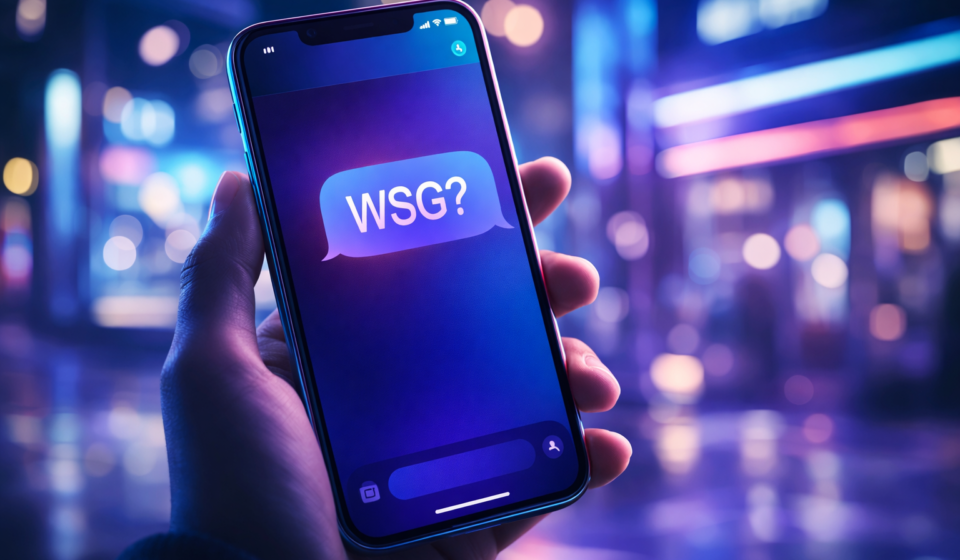
In the ever-evolving landscape of digital communication, new expressions rise to prominence almost overnight. One such phrase that has cemented its place in modern texting vernacular is ‘WSG.’ As smartphones ping with notifications and conversations flow across multiple platforms, understanding these shorthand expressions becomes essential for effective communication in 2026.
Table Of Content
- WHAT DOES WSG STAND FOR IN TEXT?
- THE ORIGIN AND EVOLUTION OF ‘WSG’
- UNDERSTANDING THE TONE OF ‘WSG’
- Friendly/Casual
- Flirtatious
- Suspicious/Confrontational
- WHEN NOT TO USE ‘WSG’
- POLITE AND PROFESSIONAL ALTERNATIVES TO ‘WSG’
- CASUAL AND FRIENDLY ALTERNATIVES TO ‘WSG’
- CONTEXTUAL BREAKDOWN: CHOOSING THE RIGHT PHRASE
- 15 BEST EXAMPLE RESPONSES TO ‘WSG’
- Friendly Responses
- Flirtatious Responses
- Neutral/Minimal Responses
- COMMON MISUNDERSTANDINGS ABOUT WSG
- Confusion with Similar Acronyms
- Perceived Aggression
- Formality Misconceptions
- WSG ACROSS DIGITAL PLATFORMS
- TikTok
- Snapchat
- Text Messaging
- FINAL THOUGHTS: MASTERING THE ART OF DIGITAL GREETINGS
WHAT DOES WSG STAND FOR IN TEXT?
WSG is an acronym that stands for “What’s Good?” It functions primarily as a casual greeting or conversation starter in digital communications. Unlike formal salutations, WSG carries a relaxed, friendly tone that invites open-ended conversation rather than specific inquiries.
When someone texts you “WSG,” they’re essentially asking some combination of:
- How are you doing?
- What’s happening in your life?
- What are you up to right now?
- Is there anything interesting going on?
The beauty of WSG lies in its versatility—it can initiate conversation without the pressure of responding to a specific question.
THE ORIGIN AND EVOLUTION OF ‘WSG’
The expression “What’s good?” has roots in African American Vernacular English (AAVE), where it served as a common greeting long before digital communication became ubiquitous. The phrase gained mainstream popularity through hip-hop culture in the early 2000s, eventually evolving into the abbreviated form we know today.
Generation Z has particularly embraced WSG, helping propel it from niche slang to widespread usage across digital platforms. By 2026, WSG has transcended its cultural origins to become a staple of online communication across diverse demographic groups, though understanding its origins provides important context for its usage.
Tone-tip: Acknowledging the cultural origins of slang terms like WSG shows respect for their heritage while using them appropriately in modern contexts.
UNDERSTANDING THE TONE OF ‘WSG’
The meaning of WSG can shift dramatically depending on context, relationship, and delivery. Here are the primary tones it commonly conveys:
Friendly/Casual
Most commonly, WSG serves as a laid-back greeting between friends or acquaintances. It signals availability for conversation without formality or specific purpose.
Flirtatious
When sent late at night, repeatedly, or with certain emojis, WSG can carry romantic or flirtatious undertones. This usage is particularly common in early dating stages or when testing romantic waters.
Suspicious/Confrontational
In certain contexts, particularly when sent after a period of silence or conflict, WSG might convey suspicion or even passive aggression, essentially asking, “What’s your deal?” or “What’s your problem?”
Pro-tip: When in doubt about the tone of a WSG message you’ve received, consider your relationship with the sender and the timing of the message for clues about intent.
WHEN NOT TO USE ‘WSG’
While WSG has become mainstream, there remain significant contexts where its use would be inappropriate:
- Professional communications: Emails to colleagues, business messages, or communications with superiors
- Formal requests: When asking for assistance, recommendations, or favors from someone you don’t know well
- Academic settings: Communications with professors, advisors, or in educational contexts
- Intergenerational communication: When messaging older family members or individuals unfamiliar with current slang
- Customer service interactions: When reaching out to businesses or service representatives
Using WSG in these contexts may create an impression of unprofessionalism or disrespect for boundaries, potentially undermining your communication goals.
POLITE AND PROFESSIONAL ALTERNATIVES TO ‘WSG’
For more formal contexts, consider these alternatives that maintain professionalism while still initiating conversation:
- “Good morning/afternoon/evening”
- “Hello, I hope you’re doing well”
- “Hi there, how are you?”
- “Greetings, I trust you’re having a productive day”
- “I hope this message finds you well”
- “Hello, I hope everything is going smoothly for you”
These alternatives signal respect for professional boundaries while still opening conversational doors.
CASUAL AND FRIENDLY ALTERNATIVES TO ‘WSG’
If you’re looking to mix up your casual greetings while maintaining the same friendly tone as WSG, try these alternatives:
- “Hey, what’s up?”
- “How’s it going?”
- “What’s happening?”
- “How you been?”
- “Yo!”
- “Sup?”
- “Hey there!”
- “Howdy!”
- “WYD” (What you doing?)
- “HYD” (How you doing?)
CONTEXTUAL BREAKDOWN: CHOOSING THE RIGHT PHRASE
| Relationship | Formal Option | Casual Option | WSG Appropriate? |
|---|---|---|---|
| Close Friend | “Hey, how have you been?” | “WSG” or “Sup?” | ✅ Yes |
| Acquaintance | “Hi there, how are you?” | “Hey, what’s up?” | ✅ Usually OK |
| Romantic Interest | “Hello, I’ve been thinking about you” | “WSG” or “Hey you 😊” | ✅ Often appropriate |
| Coworker | “Good morning, hope you’re doing well” | “Hey, how’s your day going?” | ❌ Generally avoid |
| Manager/Supervisor | “Hello, I hope this message finds you well” | “Hi, do you have a moment?” | ❌ Never appropriate |
| Family Member | “Hi [relation], how are you doing?” | Varies by dynamic | ⚠️ Depends on age/familiarity |
15 BEST EXAMPLE RESPONSES TO ‘WSG’
Friendly Responses
- “Not much, just chilling. You?”
- “Hey! Just finished work. What about you?”
- “All good here! Just watching [show/movie]. Hbu?”
- “Same old same old. How’s life treating you?”
- “Living the dream! What’s new with you?”
Flirtatious Responses
- “Thinking about you, actually 😊”
- “Just wondering when we’re hanging out next 👀”
- “Nothing much…would be better if you were here though”
- “Just missing your face. What’s good with you?”
- “About to go to sleep…unless you have better plans? 😉”
Neutral/Minimal Responses
- “Nothing much, wbu?”
- “All good 👍”
- “Just the usual”
- “Hey! Not a lot happening”
- “Working/studying. You?”
Pro-tip: Match the energy of the WSG message. If it seems casual and low-effort, a brief response is appropriate. If it seems more engaged, respond with similar enthusiasm.
COMMON MISUNDERSTANDINGS ABOUT WSG
Despite its popularity, WSG remains subject to several common misinterpretations:
Confusion with Similar Acronyms
WSG can sometimes be confused with WYG (“What You Got”) or WTG (“Way To Go”), leading to conversational disconnects. Context usually clarifies, but this confusion persists in 2026.
Perceived Aggression
Some recipients, particularly those unfamiliar with the term, may interpret WSG as confrontational or demanding. This misinterpretation is especially common across generational divides.
Formality Misconceptions
Newer internet users sometimes fail to recognize the casual nature of WSG, using it inappropriately in professional contexts where it may damage credibility.
Clarification tip: If you suspect your WSG might be misinterpreted, consider adding context or using a more explicit greeting based on your audience.
WSG ACROSS DIGITAL PLATFORMS
The usage and tone of WSG vary subtly across different digital environments:
TikTok
On TikTok, WSG often appears in comments or direct messages, frequently accompanied by emoji or as part of a broader cultural reference. It’s highly normalized on this platform, especially in content aimed at Gen Z audiences.
Instagram users often employ WSG in DMs or as a comment on Stories, usually as a conversation starter. It’s slightly more casual here than on some other platforms.
Snapchat
Perhaps the most natural home for WSG, Snapchat’s ephemeral, casual nature aligns perfectly with this greeting. It’s often sent with a blank or neutral image to initiate conversation.
Text Messaging
In standard SMS or messaging apps, WSG tends to carry more weight as a deliberate conversation opener rather than casual banter, though this varies by relationship.
FINAL THOUGHTS: MASTERING THE ART OF DIGITAL GREETINGS
As digital communication continues evolving in 2026, understanding expressions like WSG becomes increasingly important for effective connection. The key to mastering these digital greetings lies in recognizing context, relationship dynamics, and platform-specific norms.
While WSG may seem like just another throwaway acronym, it represents something more significant: our collective adaptation of language for digital efficiency without sacrificing human connection. The ability to convey warmth, curiosity, and openness in just three letters demonstrates the remarkable evolution of communication in the digital age.
Remember that all language—including digital slang—is ultimately about building bridges between people. Used thoughtfully and in appropriate contexts, WSG and similar expressions can help maintain relationships and open conversational doors in our increasingly digital world.
Communication Pro-tip: The most effective communicators adapt their language to their audience while maintaining authenticity. Whether you’re sending a WSG to a friend or crafting a formal email, letting relationship guide your choice of words will serve you well in any digital interaction.