

In the fast-paced world of digital communication, we often resort to shortcuts and abbreviated expressions. Among these, ‘mhm’ has emerged as a ubiquitous acknowledgment that transcends platforms and demographics. This seemingly simple utterance carries surprising weight in our text conversations, influencing how our messages are received and interpreted. While convenient, this minimalist response brings its own set of challenges and nuances worth exploring.
Table Of Content
- What Does ‘Mhm’ Mean in Text?
- Mhm vs. Mm-hmm: Are They the Same?
- Tone Matters: Understanding the Nuances of ‘Mhm’
- 1. Affirmative
- 2. Indifferent or Passive
- 3. Skeptical or Doubtful
- Why Look for Alternatives to ‘Mhm’?
- Polite Alternatives to ‘Mhm’
- Professional Alternatives to ‘Mhm’
- Casual Alternatives to ‘Mhm’
- 13 Best Ways to Reply Instead of Saying ‘Mhm’
- How to Choose the Best Alternative to ‘Mhm’
- Context
- Tone
- Clarity
- Common Misunderstandings of ‘Mhm’
- Conclusion: Expressing Agreement Thoughtfully
What Does ‘Mhm’ Mean in Text?
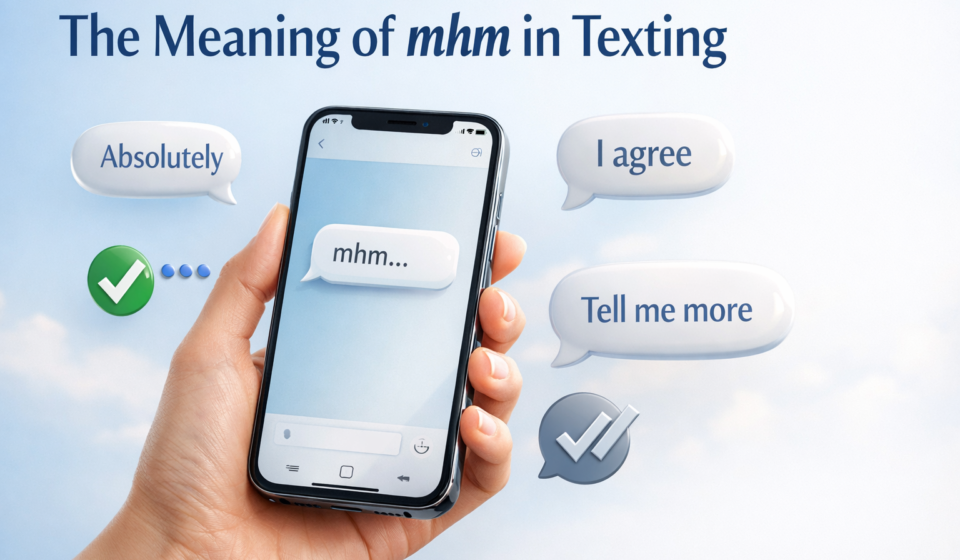
‘Mhm’ is an onomatopoeic representation of a sound many of us make naturally in conversation—a closed-mouth, humming affirmation. In textual communication, it generally translates to:
- Basic agreement: “Yes” or “I agree”
- Acknowledgment: “I’m listening” or “I hear you”
- Recognition: “I understand what you’re saying”
- Passive acceptance: “Whatever you say”
This versatility makes ‘mhm’ a convenient go-to response, but this same flexibility can lead to significant misunderstandings when tone and context aren’t clearly established.
Mhm vs. Mm-hmm: Are They the Same?
Though they represent essentially the same sound, ‘mhm’ and ‘mm-hmm’ carry subtle differences in their written usage:
- Mhm – Generally more casual, abbreviated, and commonly used in quick text exchanges or instant messaging
- Mm-hmm – Often appears in more formal or stylized writing, such as dialogue in literature or transcribed interviews
The hyphenated version ‘mm-hmm’ tends to convey more deliberateness and emphasis, while ‘mhm’ comes across as quicker and more off-the-cuff. In professional communication, neither is typically considered formal enough for business correspondence.
Tone Matters: Understanding the Nuances of ‘Mhm’
Like many short expressions in text, ‘mhm’ is a chameleon that changes meaning based on context and punctuation. Understanding these tonal variations is essential for effective communication.
1. Affirmative
When used with enthusiasm, ‘mhm!’ conveys positive agreement or excitement. ✅
Example: “I got tickets to that concert you wanted to see!” “Mhm! That’s fantastic!”
2. Indifferent or Passive
Without punctuation or with a period, ‘mhm’ or ‘mhm.’ can read as disinterested, bored, or merely acknowledging without engagement. 😐
Example: “I’ll be running late for dinner tonight.” “Mhm.”
3. Skeptical or Doubtful
When accompanied by multiple ‘m’s or ellipses, ‘mmhm…’ suggests skepticism, disbelief, or suspicion. 🤨
Example: “I definitely didn’t eat the last cookie.” “Mhmm…”
Why Look for Alternatives to ‘Mhm’?
While convenient, ‘mhm’ has several drawbacks that make alternatives worth considering:
- Miscommunication risk: Its ambiguity can lead to misinterpreted tone and intent
- Perception issues: May come across as disinterested, dismissive, or lazy
- Professional limitations: Generally unsuitable for workplace or formal communications
- Emotional flatness: Lacks the capacity to convey genuine enthusiasm or empathy
- Cultural barriers: May not translate well across different cultural contexts
By expanding your repertoire beyond ‘mhm,’ you can communicate more effectively, establish stronger connections, and avoid potential misunderstandings.
Polite Alternatives to ‘Mhm’
When aiming for courtesy and respect in your communications, consider these refined alternatives:
- Absolutely – Conveys enthusiastic agreement while maintaining politeness
Example: “Could you review this document when you have time?” “Absolutely, I’ll look at it this afternoon.”
- Of course – Indicates willing agreement with a touch of graciousness
Example: “Would you mind helping me with this project?” “Of course, I’d be happy to assist.”
- Certainly – Projects confidence and reliability in your affirmation
Example: “Can I count on your support for the initiative?” “Certainly, you have my full backing.”
- I understand – Acknowledges comprehension with empathy
Example: “I’m feeling overwhelmed with all these deadlines.” “I understand. Let me know if I can help lighten your load.”
- I appreciate that – Expresses gratitude while acknowledging the other person
Example: “I’ve adjusted the schedule to give you more preparation time.” “I appreciate that. It will make a significant difference.”
Professional Alternatives to ‘Mhm’
In workplace or formal settings, these alternatives maintain professionalism while clearly communicating understanding:
- Understood – Concise, clear acknowledgment suitable for workplace communications
Example: “The deadline has been moved to Thursday.” “Understood. I’ll adjust my timeline accordingly.”
- Noted – Brief but professional indication that information has been registered
Example: “Please include the latest figures in your report.” “Noted. I’ll ensure they’re incorporated.”
- I confirm – Provides clear, traceable acknowledgment for important matters
Example: “We need your approval on the budget by EOD.” “I confirm. The approved budget will be in your inbox shortly.”
- Acknowledged – Formal recognition, particularly useful in operational contexts
Example: “System maintenance will occur at 2 AM.” “Acknowledged. We’ll plan operations around the downtime.”
- I’m following – Indicates active engagement in an ongoing discussion
Example: “Let me explain our new approach to customer acquisition.” “I’m following. Please continue.”
Casual Alternatives to ‘Mhm’
For informal conversations with friends and family, these alternatives maintain a relaxed tone while being more expressive:
- Yeah – Simple, straightforward agreement for everyday conversations
Example: “Want to grab lunch later?” “Yeah, sounds good!”
- Sure thing – Friendly, accommodating agreement with positive undertones
Example: “Can you send me that photo from yesterday?” “Sure thing, sending it now!”
- Totally – Enthusiastic agreement that conveys excitement
Example: “That movie was amazing, wasn’t it?” “Totally! The ending blew my mind!”
- I hear you – Empathetic acknowledgment that validates the speaker’s perspective
Example: “This homework assignment is so complicated.” “I hear you. The instructions are really confusing.”
- Cool – Versatile, laid-back affirmation for various casual contexts
Example: “I’ll pick you up around 8.” “Cool, I’ll be ready.”
13 Best Ways to Reply Instead of Saying ‘Mhm’
Here’s an expanded list of alternatives for various scenarios, complete with tone suggestions and usage contexts:
- I see – Neutral, thoughtful
Perfect for acknowledging information while suggesting you’re processing it. - That makes sense – Positive, validating
Affirms the logic or reasoning behind what someone has shared. - I’m with you – Supportive, aligned
Signals agreement and solidarity, especially useful in discussions. - Fair point – Respectful, considered
Acknowledges the validity of someone’s perspective, even in disagreement. - Good to know – Appreciative, practical
Indicates you value the information shared and will retain it. - Precisely – Strong agreement, intellectual
Expresses that someone has articulated exactly what you believe. - Indeed – Formal, dignified
Provides elegant affirmation in more sophisticated conversations. - You’ve got it – Encouraging, approving
Confirms someone has the right idea or has understood correctly. - Well said – Complimentary, impressed
Praises someone’s articulation while agreeing with their point. - Right on – Enthusiastic, casual
Expresses energetic agreement in informal settings. - I couldn’t agree more – Emphatic, passionate
Communicates complete, wholehearted agreement. - That’s valuable – Appreciative, reflective
Acknowledges the worth of someone’s contribution to a conversation. - I’m all ears – Attentive, engaged
Shows you’re actively listening and interested in what comes next.
How to Choose the Best Alternative to ‘Mhm’
Selecting the right alternative depends on several key factors:
Context
Consider where and with whom you’re communicating:
- Professional settings: Opt for formal alternatives like “Understood” or “I confirm”
- Personal relationships: More casual options like “Yeah” or “Sure thing” are appropriate
- Public forums: Clear, universally understood responses help avoid misinterpretation
Tone
Match your response to the emotional context:
- Serious discussions: Use thoughtful, measured responses like “I understand” or “I appreciate your perspective”
- Light conversations: More playful options like “Totally!” keep the mood upbeat
- Problem-solving scenarios: “I follow your reasoning” or “That makes sense” show active engagement
Clarity
Prioritize clear communication:
- For important matters: Be explicit with “I agree” or “I understand and will act accordingly”
- When precision matters: “To confirm, I’m understanding that…” eliminates ambiguity
- When representing yourself or an organization: Use responses that reflect your values and standards
Common Misunderstandings of ‘Mhm’
The brevity and ambiguity of ‘mhm’ can lead to several problematic interpretations:
- Perceived disinterest: Recipients may feel you’re not fully engaged or invested in the conversation
- Dismissiveness: Can come across as minimizing the importance of what’s being shared
- Laziness: May suggest you couldn’t be bothered to formulate a more thoughtful response
- Sarcasm: Without proper context, can be read as passive-aggressive or mocking
- Reluctance: Might be interpreted as hesitant or unenthusiastic agreement
These misunderstandings can damage relationships, particularly in professional settings or in sensitive personal conversations where clear communication is essential.
Conclusion: Expressing Agreement Thoughtfully
As digital communication continues to evolve in 2026, the thoughtfulness we bring to our exchanges becomes increasingly important. While ‘mhm’ has its place in ultra-casual conversations, expanding your repertoire of acknowledgments can significantly enhance your communication effectiveness. By incorporating a variety of expressions and responses, we create a richer dialogue that fosters understanding and connection. Furthermore, the ability to adapt our communication style to different contexts is crucial, especially when decoding cm in digital communication. This flexibility not only demonstrates our engagement but also helps to bridge gaps in interpretation that can arise from the limitations of text-based interactions.
By choosing alternatives that match the context, clarify your intent, and honor the relationship, you transform simple acknowledgments into meaningful connections. Whether you’re navigating professional correspondence, managing personal relationships, or participating in community discussions, the way you acknowledge others speaks volumes about how much you value the interaction.
Remember that in text-based communication, we lack the nonverbal cues that enrich face-to-face exchanges. This makes our word choices all the more significant. The next time you’re tempted to respond with a quick ‘mhm,’ consider whether a more specific and thoughtful alternative might better serve your communication goals.
Ultimately, effective digital communication isn’t just about efficiency—it’s about connecting with clarity, respect, and intention. By mastering the art of the acknowledgment, you elevate every interaction and build stronger relationships in our increasingly digital world.