

WHAT DOES ‘WDYM’ STAND FOR?
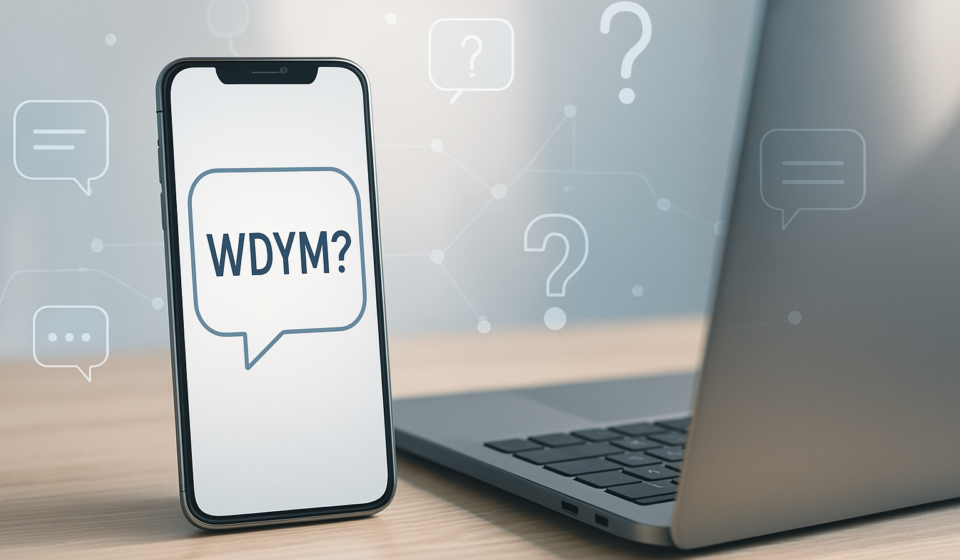
In the fast-paced world of digital communication, acronyms serve as convenient shortcuts to express common phrases. WDYM stands for “What Do You Mean?” This four-letter abbreviation has become a staple in text messages, social media comments, and online chats, offering users a quick way to ask for clarification without typing out the full question.
Table Of Content
- WHAT DOES ‘WDYM’ STAND FOR?
- UNDERSTANDING THE TONE BEHIND ‘WDYM’
- Punctuation
- Context
- WHEN AND WHERE IS IT APPROPRIATE TO USE ‘WDYM’?
- WHY YOU MIGHT WANT ALTERNATIVES TO ‘WDYM’
- 15 SMART ALTERNATIVES TO ‘WDYM’ BASED ON TONE AND CONTEXT
- TONE GUIDE: MATCHING YOUR RESPONSE WITH THE RIGHT MOOD
- THE PROBLEM WITH OVERUSING ACRONYMS LIKE WDYM
- WHEN IS ‘WDYM’ TOTALLY FINE TO USE?
- TIPS FOR CHOOSING THE RIGHT PHRASE
- WHY THIS MATTERS: BETTER COMMUNICATION = STRONGER RELATIONSHIPS
- CONCLUSION: MAKE WDYM WORK FOR YOU, OR REPLACE IT GRACEFULLY
The acronym emerged alongside other popular text shorthand like LOL (laugh out loud), BRB (be right back), and IMO (in my opinion) as digital platforms evolved and character limits became common constraints. WDYM specifically addresses a universal communication need: seeking explanation when something isn’t clear.
UNDERSTANDING THE TONE BEHIND ‘WDYM’
Despite its straightforward meaning, WDYM can carry various tones depending on how it’s presented. The interpretation often hinges on subtle factors that text alone might not fully convey.
Punctuation
How you punctuate WDYM significantly affects how others perceive it:
- WDYM – Neutral, straightforward question
- WDYM? – Genuine curiosity or confusion
- WDYM?? – Increased confusion or slight disbelief
- WDYM?! – Surprise, possibly with irritation
- wdym… – Often indicates skepticism or a leading question
Context
The conversation surrounding WDYM provides essential context for interpreting tone:
- After a joke: Likely indicates confusion about the punchline
- Following ambiguous information: Simple request for clarification
- After a disagreement: Could signal frustration or defensive questioning
- During a serious conversation: May come across as dismissive if not carefully used
Understanding these nuances helps prevent miscommunications that frequently occur in text-based exchanges where vocal tone and facial expressions are absent.
WHEN AND WHERE IS IT APPROPRIATE TO USE ‘WDYM’?
While WDYM has become ubiquitous in online communication, its appropriateness varies widely across different contexts:
Appropriate settings include:
- Casual text messages with friends
- Personal social media interactions
- Informal chat platforms like Discord or WhatsApp groups
- Gaming communities and streams
- Casual conversations with colleagues you have a friendly rapport with
Settings where WDYM is generally inappropriate:
- Professional emails
- Formal business communications
- Customer service interactions
- Academic writing
- Conversations with people unfamiliar with internet shorthand
- Communications with senior colleagues or executives
WHY YOU MIGHT WANT ALTERNATIVES TO ‘WDYM’
While convenient, there are several compelling reasons to consider alternatives to WDYM in various situations:
Politeness: In some contexts, acronyms can come across as abrupt or casual. WDYM, especially when capitalized, might seem confrontational or demanding rather than inquisitive.
Professionalism: In workplace communications, using full phrases instead of acronyms typically projects greater professionalism and attention to detail. It signals respect for the conversation and the recipient.
Clarity: Not everyone is familiar with every acronym. Using WDYM with older generations, non-native English speakers, or those less versed in internet culture may create confusion rather than clarity.
Inclusivity: Text acronyms can unintentionally exclude people who use screen readers or other accessibility tools, as these technologies might struggle with non-standard abbreviations.
15 SMART ALTERNATIVES TO ‘WDYM’ BASED ON TONE AND CONTEXT
1. “Could you elaborate on that?”
Tone: Professional, courteous
Best For: Workplace communications, emails to superiors
Example: “You mentioned optimizing our workflow. Could you elaborate on that?”
2. “I’m not sure I understand.”
Tone: Neutral, thoughtful
Best For: Professional settings, uncertain situations
Example: “I’m not sure I understand. Are you suggesting we postpone the meeting?”
3. “Can you clarify what you’re referring to?”
Tone: Formal, precise
Best For: Academic or technical discussions
Example: “Can you clarify what you’re referring to in paragraph three?”
4. “I’d like to understand better.”
Tone: Curious, engaged
Best For: Learning environments, mentorship conversations
Example: “I’d like to understand better how these metrics relate to our goals.”
5. “Could you please explain?”
Tone: Polite, straightforward
Best For: Customer service, general professional use
Example: “Could you please explain the return policy?”
6. “I’m confused about…”
Tone: Honest, vulnerable
Best For: Personal conversations, learning situations
Example: “I’m confused about why we need to change the approach.”
7. “Come again?”
Tone: Casual, friendly
Best For: In-person conversations, informal chats
Example: “You’re moving to Wyoming? Come again?”
8. “I’m not following.”
Tone: Direct, conversational
Best For: Team meetings, friendly discussions
Example: “I’m not following your logic about the budget allocation.”
9. “Sorry, what do you mean by that?”
Tone: Apologetic, seeking clarity
Best For: When you feel you might have missed something
Example: “Sorry, what do you mean by ‘agile approach’?”
10. “Could you unpack that a bit?”
Tone: Modern professional, curious
Best For: Collaborative workspaces, brainstorming sessions
Example: “Could you unpack that bit about customer segmentation?”
11. “I’d appreciate more context.”
Tone: Respectful, professional
Best For: Cross-departmental communications
Example: “I’d appreciate more context around these requirements.”
12. “How so?”
Tone: Brief but not abrupt, curious
Best For: Quick follow-ups in flowing conversations
Example: “You think the plan won’t work? How so?”
13. “In what way?”
Tone: Neutral, inquiry-focused
Best For: Seeking specifics without challenging
Example: “You mentioned it’s different now. In what way?”
14. “I’m trying to understand…”
Tone: Patient, considerate
Best For: Navigating potentially sensitive topics
Example: “I’m trying to understand your perspective on this policy.”
15. “Could you help me understand?”
Tone: Humble, collaborative
Best For: Learning from someone with expertise
Example: “Could you help me understand how this algorithm works?”
TONE GUIDE: MATCHING YOUR RESPONSE WITH THE RIGHT MOOD
| Communication Context | Formal Alternative | Casual Alternative |
|---|---|---|
| When confused | “I’m seeking clarification on…” | “I’m lost here. What do you mean?” |
| When surprised | “I’m surprised by that statement. Could you expand?” | “Wait, seriously? How come?” |
| When skeptical | “I’d like to understand the reasoning behind that.” | “Really? How does that work?” |
| When interested | “That sounds intriguing. Please elaborate.” | “Oh cool! Tell me more about that!” |
| When disagreeing | “I see things differently. Could you explain your perspective?” | “I don’t get why you’d say that…” |
THE PROBLEM WITH OVERUSING ACRONYMS LIKE WDYM
While acronyms like WDYM serve a purpose in digital communication, their overuse presents several challenges:
Communication barriers: Not everyone is familiar with the same acronyms, especially across generational or cultural divides. What seems obvious to one person may be completely foreign to another.
Tone misinterpretation: Without vocal inflection, acronyms can be read with unintended tones. WDYM can be interpreted as genuinely curious, confused, or confrontational depending on the reader.
Professional perception: In professional settings, heavy reliance on acronyms might create an impression of casualness that could undermine your message or credibility.
Accessibility issues: Screen readers and translation tools may struggle with acronyms, creating barriers for users with disabilities or those who speak different languages.
WHEN IS ‘WDYM’ TOTALLY FINE TO USE?
Despite potential drawbacks, there are plenty of situations where WDYM works perfectly:
- Quick exchanges with friends who share your communication style
- Platforms with character limits (like Twitter/X)
- Casual group chats where brevity is valued
- Gaming or streaming communities where acronyms are part of the culture
- When typing quickly on mobile devices
- Among peers who regularly use similar shorthand
TIPS FOR CHOOSING THE RIGHT PHRASE
When deciding whether to use WDYM or an alternative, consider these factors:
- Know your audience: Consider their age, technical savvy, and familiarity with internet culture.
- Assess the relationship: The closer and more casual the relationship, the more appropriate acronyms become.
- Evaluate the platform: Different digital spaces have different norms and expectations.
- Consider the stakes: Higher-stakes communications generally benefit from clearer, more complete phrasing.
- Match the conversation flow: If the conversation has been formal, maintain that tone. If casual, acronyms fit more naturally.
WHY THIS MATTERS: BETTER COMMUNICATION = STRONGER RELATIONSHIPS
The choice between WDYM and its alternatives may seem trivial, but thoughtful communication choices build stronger connections:
Clear communication reduces misunderstandings that can damage relationships. When someone feels understood and respected in how you communicate with them, trust develops naturally. In professional contexts, communication style can impact how colleagues perceive your competence and attention to detail.
By adapting your communication style to different contexts, you demonstrate emotional intelligence and consideration for others. This flexibility is valuable in both personal and professional spheres.
CONCLUSION: MAKE WDYM WORK FOR YOU, OR REPLACE IT GRACEFULLY
WDYM serves a useful purpose in digital communication when used appropriately. Understanding its proper context and knowing when to replace it with more formal or nuanced alternatives allows you to communicate more effectively across different situations.
The key takeaway is balance: There’s no need to eliminate acronyms from your digital vocabulary entirely, but developing a repertoire of alternatives ensures you can adapt your communication style to any context. Whether you choose WDYM or “Could you please elaborate on that point?” depends entirely on who you’re talking to and where the conversation is taking place.
By mastering both casual and formal clarification requests, you’ll navigate digital communication more successfully, avoiding misunderstandings while building stronger connections with everyone from close friends to professional contacts.