

In the ever-evolving landscape of digital communication, abbreviations have become the shorthand that keeps our conversations efficient and flowing. From the classic LOL and OMG to more nuanced expressions, these digital shortcuts have transformed how we connect online. Among these modern text acronyms, ‘HYB’ has emerged as a popular way to check in with friends, colleagues, and acquaintances in a casual yet thoughtful manner.
Table Of Content
- What Does HYB Stand For in Text?
- When and Where Is ‘HYB’ Used?
- Why People Use ‘HYB’ Instead of Typing the Full Phrase
- Understanding Tone: How to Choose the Right Response to HYB
- Casual Responses
- Polite Responses
- Professional Responses
- 15 Best Replies to ‘HYB?’ for Every Situation
- For Reconnecting with Friends
- For Casual Professional Contacts
- For Dating/Romantic Contexts
- How to Choose the Right HYB Alternative for Yourself
- More Casual Alternatives
- More Formal Alternatives
- HYB and the Psychology of Digital Check-ins
- Pro Tips for Using and Responding to HYB in a Natural Way
- Common Mistakes to Avoid When Using HYB or Responding
- DO
- DON’T
- Final Thoughts: HYB as a Digital Social Skill
What Does HYB Stand For in Text?
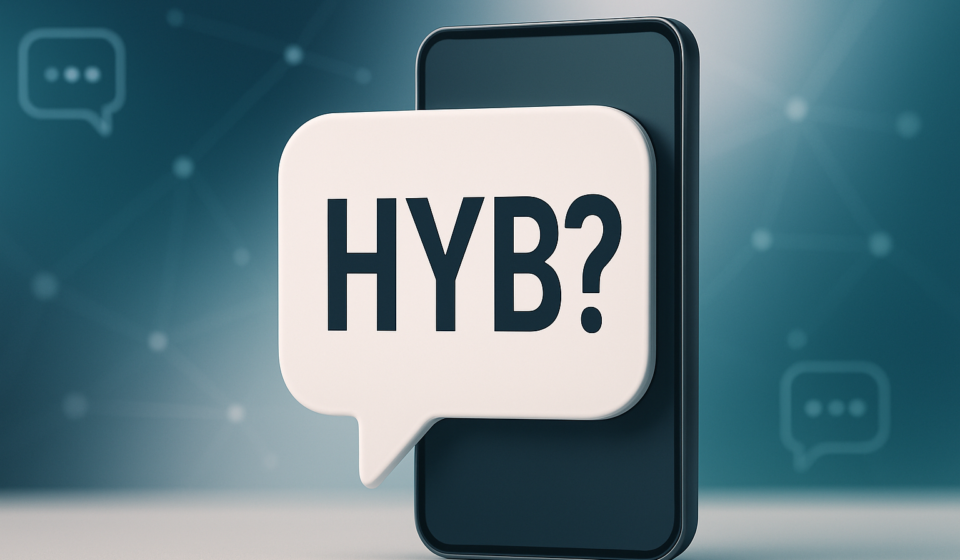
HYB stands for “How You Been?” – a slightly more casual and contracted version of the traditional greeting “How Have You Been?” This digital abbreviation serves as a friendly check-in and conversation starter, striking a balance between casual interest and genuine concern for someone’s wellbeing.
HYB (How You Been?) – An informal text abbreviation used to inquire about someone’s recent life events, status, or general wellbeing when reconnecting after a period without communication.
This acronym typically appears at the beginning of conversations and functions as a digital equivalent of the warm “How have you been?” you might ask someone you haven’t seen in a while. The subtle difference between “How you been?” and “How are you?” is that HYB implies some time has passed since your last interaction, making it particularly suitable for rekindling conversations.
When and Where Is ‘HYB’ Used?
Understanding the appropriate contexts for using HYB can help you communicate more effectively across different digital platforms and relationships. The following table breaks down common usage scenarios:
| Communication Channel | Appropriateness | Examples |
|---|---|---|
| Text Messages | Very Common | “Hey Sam! HYB? Haven’t caught up in ages!” |
| Social Media DMs | Common | “HYB since graduation? Saw your new job update!” |
| Workplace Chat | Moderately Appropriate | “HYB handling the new project? Adjusting well?” |
| Less Common | Rarely used in email openers except in very casual workplace cultures | |
| Professional Communication | Use With Caution | Better replaced with “How have you been?” in full |
HYB thrives in casual digital environments but requires more consideration in professional contexts. As a rule of thumb, the more formal the communication channel, the less appropriate abbreviated text language becomes.
Why People Use ‘HYB’ Instead of Typing the Full Phrase
The rise of acronyms like HYB isn’t simply about laziness or saving time – they serve several practical and social functions in our digital interactions:
- Efficiency: In fast-paced digital conversations, abbreviations save time and keystrokes, allowing for quicker exchanges.
- Digital Fluency: Using recognized digital shorthand demonstrates familiarity with contemporary communication styles.
- Tone Setting: HYB establishes a casual, friendly atmosphere from the conversation’s outset.
- Reduced Formality: The abbreviated form softens the potential stiffness of “How have you been?” making it feel more approachable.
- Conversation Catalyst: Its open-ended nature invites the recipient to share recent life updates without feeling interrogated.
While older generations might view text abbreviations as language degradation, linguistic research suggests they actually represent language evolution and adaptation to new communication environments. Understanding and appropriately using acronyms like HYB demonstrates digital literacy and social awareness in modern communication.
Understanding Tone: How to Choose the Right Response to HYB
When someone sends you “HYB?”, your response should match both the context of your relationship and the communication channel. Here’s how to categorize and select the most appropriate response style:
Casual Responses
Best for close friends, family members, and informal social relationships. These responses are relaxed, often use additional abbreviations, and may include emojis or slang:
- “All good! Just grinding through the semester. WBU?”
- “Been crazy busy but loving it! 🔥 How about you?”
- “Living my best life! Missed talking to you tho!”
Polite Responses
Ideal for acquaintances, colleagues you’re friendly with, or casual professional relationships. These strike a balance between warmth and appropriateness:
- “I’ve been doing well, thanks for asking! Work has been keeping me busy but enjoyable.”
- “Pretty good overall! Adjusting to some new changes at work. How about yourself?”
- “I’ve been great! Making progress on those goals we discussed last time.”
Professional Responses
Reserved for workplace communications, networking contacts, or more formal digital relationships. These responses maintain professionalism while still being personable:
- “I’ve been well, thank you. The quarterly project is coming along nicely. How have you been?”
- “I appreciate you asking. Things have been productive here as we prepare for the upcoming conference.”
- “Thank you for checking in. I’ve been focusing on developing our new strategy, which I’d be happy to discuss with you.”
15 Best Replies to ‘HYB?’ for Every Situation
Here’s a comprehensive collection of effective responses categorized by scenario, ready to copy and use in your conversations:
For Reconnecting with Friends
- “Been on a rollercoaster lately! New job, new apartment, same old me though. HBU?”
- “SO good to hear from you! Been missing our chats. Life’s been hectic but good – lots to fill you in on!”
- “Surviving and thriving! Finally took that trip I was telling you about. Got time to catch up properly this week?”
- “Ups and downs, you know how it goes! But mostly ups lately. Would love to hear what’s new with you!”
- “Been better, been worse! Just taking it day by day. Really needed this check-in, thanks for reaching out.”
For Casual Professional Contacts
- “I’ve been doing well! Just wrapped up that project we discussed last time. Looking forward to hearing about your progress too.”
- “Great timing! I’ve been meaning to reach out. Things have been busy but productive on my end. How about you?”
- “I’ve been well, thank you for asking. Actually exploring some new opportunities in [field] recently. Would appreciate your thoughts sometime.”
- “Been focused on expanding my skills in [area]. Actually, your previous advice has been really helpful with that!”
- “Doing well overall! Adjusting to some new responsibilities but enjoying the challenge. Always good to reconnect.”
For Dating/Romantic Contexts
- “Been thinking about you, actually! Life’s been keeping me busy, but never too busy to chat with you 😊”
- “Better now that you’re messaging! Been having a pretty good week, but would be even better if we could catch up in person soon.”
- “Missing our conversations! Been focused on work, but definitely need some balance. Free this weekend?”
- “Been on a self-improvement kick lately! Working out, reading more… would love to tell you about it over coffee?”
- “Honestly? Been wondering when I’d hear from you next. Life’s good, but would be better with more of your company.”
How to Choose the Right HYB Alternative for Yourself
While HYB is popular, you might want to customize your check-in style based on your personal communication preferences or the specific relationship. Consider these alternatives for different tones and contexts:
More Casual Alternatives:
- “WUP?” (What’s Up?) – Ultra casual, best for very close friends
- “WUGD?” (What You Got Going Down?) – Playful, youthful energy
- “Howzit?” – Relaxed, warm, conversational starter
More Formal Alternatives:
- “HTG?” (How’s Things Going?) – Semi-formal but still friendly
- “HHYB?” (How Have You Been?) – More grammatically complete version
- “Checking in – how are you faring?” – Professional but caring
When selecting your preferred check-in style, consider not just your own communication comfort but also how the recipient typically communicates. Mirroring their general texting style can create rapport and show attentiveness to their preferences.
HYB and the Psychology of Digital Check-ins
The simple act of sending “HYB?” carries deeper psychological implications than might be immediately apparent. Digital check-ins serve important social and emotional functions:
Social Maintenance: Regular, light-touch communications like HYB help maintain relationships during periods when in-person interaction isn’t possible. Research in digital psychology suggests these micro-interactions prevent social bonds from weakening over time.
Emotional Intelligence: Choosing to check in with someone demonstrates emotional awareness and interest in their wellbeing. Even in abbreviated form, it signals that you’re thinking about them and value the relationship enough to invest time in reconnection.
Reciprocity: The open-ended nature of HYB invites reciprocal sharing. By asking about someone’s status without overwhelming them with specific questions, you create space for them to share what feels most relevant to them at that moment.
Low-Pressure Connection: Unlike more demanding communications (“Can we talk?” or “I need your input”), HYB serves as a low-stakes invitation to engage, allowing the other person to determine their level of engagement based on their current capacity.
Understanding these psychological dimensions can help you use HYB more intentionally, recognizing that even simple digital greetings contribute to relationship maintenance and emotional wellbeing in our increasingly online social lives.
Pro Tips for Using and Responding to HYB in a Natural Way
To ensure your HYB exchanges feel authentic rather than forced or awkward, follow this practical checklist:
- Timing matters: Use HYB after a natural gap in communication, not immediately after another conversation has ended.
- Add context when needed: “HYB since the move?” is more thoughtful than generic “HYB?”
- Balance brevity and detail: When responding, share enough to show engagement but don’t overwhelm with a life essay.
- End with a reciprocal question: Always bounce the conversation back with your own inquiry.
- Match energy levels: If they respond enthusiastically, mirror that energy; if they seem reserved, respect that tone.
- Be authentic: It’s okay to admit if things haven’t been great; authentic connection beats forced positivity.
- Follow up meaningfully: If they share something significant, acknowledge it in your next message rather than changing subjects.
Remember that digital communication works best when it mirrors the natural rhythm of in-person conversations – with give and take, appropriate pauses, and genuine interest in the other person’s responses.
Common Mistakes to Avoid When Using HYB or Responding
Even simple greetings can go awry in digital communication. Here are the key dos and don’ts to navigate HYB exchanges successfully: Understanding wsg meaning in digital communication is crucial for maintaining clarity and preventing misunderstandings. This acronym often conveys a casual tone, but its interpretation can vary significantly among different groups. It’s essential to consider your audience and the context in which you are communicating to ensure your message is received as intended.
DO:
- Tailor your response length to match the closeness of the relationship
- Acknowledge any significant life events you know they’ve recently experienced
- Use HYB to genuinely reconnect, not just as a formality before asking for something
- Allow appropriate response time – not everyone checks messages constantly
- Follow up with specific questions if they share something that warrants deeper conversation
DON’T:
- Send just “Good” or one-word responses that kill conversation momentum
- Overwhelm with excessive personal details in professional contexts
- Use HYB in extremely formal professional communications where full phrasing is expected
- Send HYB repeatedly to someone who hasn’t responded to previous check-ins
- Forget the context of your last interaction – if it ended on a tense note, HYB might seem dismissive
The most common mistake is treating digital check-ins as meaningless formalities rather than genuine opportunities to connect. Even brief exchanges can strengthen relationships when approached with authentic interest and appropriate awareness of context.
Final Thoughts: HYB as a Digital Social Skill
In 2026’s digital landscape, mastering contextual communication abbreviations like HYB represents an important social competency. These brief exchanges are far from trivial – they form the connective tissue that maintains our personal and professional relationships across digital spaces. As we continue to navigate this evolving communication landscape, exploring smart alternatives to tysm usage can enhance clarity and connection. Utilizing phrases that resonate well with audiences can lead to more meaningful exchanges, fostering deeper relationships. By adapting our communication strategies, we can better align with the expectations of our digital counterparts, paving the way for more effective interactions.
The ability to navigate between casual and formal digital communication styles demonstrates adaptability and emotional intelligence in an increasingly nuanced online social world. Whether you’re reconnecting with an old friend, maintaining professional networks, or nurturing romantic connections, understanding when and how to use expressions like HYB helps you communicate more effectively.
As digital language continues to evolve, staying current with communication trends while maintaining authenticity will remain the gold standard for meaningful online interaction. The most successful digital communicators recognize that behind every acronym and abbreviation are real human connections waiting to be nurtured through thoughtful engagement.
So the next time you see “HYB?” pop up on your screen, remember – it’s not just a casual greeting, but an invitation to reconnect in our increasingly connected yet physically distant world.