

In our hyperconnected world, the evolution of communication has given rise to countless acronyms and shorthand expressions. Among these digital linguistic innovations, ‘DND’ has emerged as a powerful boundary-setting tool across platforms. From messaging apps to professional communication channels, understanding what DND means, when to use it, and how to respond appropriately has become an essential skill in our digital etiquette toolkit.
Table Of Content
- What Does DND Stand For in Text?
- Where Did DND Originate From?
- What Does It Mean When Someone Texts ‘DND’?
- How Tone Affects the Meaning of DND
- Polite & Professional Alternatives to ‘DND’
- Friendly & Casual Alternatives to ‘DND’
- Emotional & Mental Health-Oriented Ways to Say DND
- When Should You Use ‘DND’?
- How to Respond to Someone Who Says ‘DND’?
- 15 Respectful Replies to ‘DND’
- Why It’s Important to Use Alternatives Thoughtfully
- What NOT to Say Instead of ‘DND’
- The Nuance of Saying ‘Do Not Disturb’ Without Saying It
- Digital Etiquette Around ‘DND’
- Conclusion: DND is About Boundaries, Not Dismissal
As we navigate the complexities of constant connectivity in 2026, the need to create space for focus, rest, and personal time has never been more important. This comprehensive guide explores the nuances of the ‘Do Not Disturb’ acronym and provides actionable insights on using it respectfully in various contexts.
What Does DND Stand For in Text?
DND stands for Do Not Disturb. This straightforward acronym serves as a digital boundary marker, signaling that the sender is temporarily unavailable or needs uninterrupted time. While seemingly simple, its application varies widely across different platforms and contexts.
The acronym is commonly used across:
- Messaging apps like WhatsApp, Telegram, and Facebook Messenger
- Professional communication tools such as Slack, Microsoft Teams, and Discord
- Email signature lines or auto-responders
- Status updates on social media platforms
- Video conferencing platforms like Zoom and Google Meet
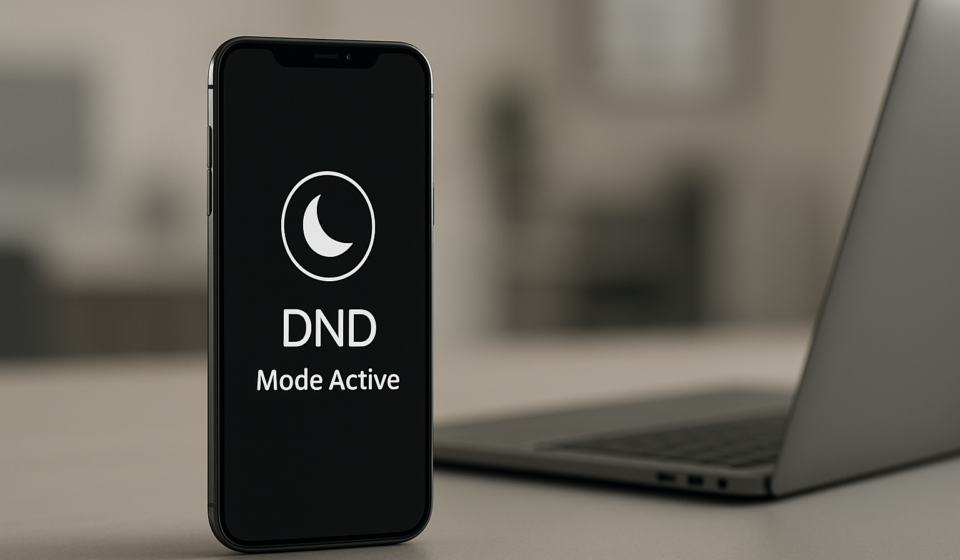
Depending on the platform, DND may appear as a manual status update typed by the user or as a built-in feature that automatically displays when activated.
Where Did DND Originate From?
The concept of “Do Not Disturb” predates digital communication by centuries. Physical DND signs hanging on doorknobs in hotels have been a universal symbol requesting privacy since the early 20th century. These tangible markers provided a socially accepted way to communicate the need for uninterrupted space without direct confrontation.
As communication shifted to digital spaces, this concept naturally evolved. Early implementations appeared in:
- Office phone systems with DND buttons in the 1980s
- Early instant messaging platforms like AIM and ICQ in the late 1990s
- Mobile phones as a silence mode feature in the early 2000s
By 2010, smartphone operating systems like iOS and Android had formalized DND as a system-level feature that could block notifications. The acronym soon became commonplace in text-based communications, serving the same fundamental human need for periodic disconnection in increasingly connected environments.
What Does It Mean When Someone Texts ‘DND’?
When someone sends “DND” in a text or sets it as their status, they’re communicating one of several possible situations:
- Focus time: They’re working on something that requires deep concentration and can’t afford interruptions.
- In a meeting or presentation: They’re in a professional setting where checking messages would be inappropriate.
- Rest period: They’re taking personal time to recharge and disconnect.
- Mental health break: They’re creating space for emotional wellbeing and reduced stimulation.
- Sleep time: They’ve set boundaries around their sleep schedule to protect their rest.
It’s important to recognize that DND is not a rejection of the sender personally but rather a boundary around the receiver’s time and attention. In most cases, the person will respond when they’re available again.
How Tone Affects the Meaning of DND
Context and delivery significantly impact how DND is interpreted. Consider these variations and their tonal implications:
| Context | Example | Implied Meaning |
|---|---|---|
| Professional | “In meetings until 3pm. DND.” | Structured, time-bound unavailability |
| Casual | “movie night, DND! :)” | Friendly, temporary focus on leisure |
| Emotional | “Need space. DND today.” | Request for emotional boundaries |
| Urgent | “Critical deadline. DND unless emergency.” | High-stakes focus time with exception |
The same three letters can carry dramatically different weight depending on capitalization, punctuation, accompanying emojis, and the relationship context. In professional settings, DND tends to be more structured and specific, while personal contexts might allow for more flexibility in interpretation.
Polite & Professional Alternatives to ‘DND’
In professional environments, more specific and context-appropriate alternatives to DND can better communicate your availability status while maintaining workplace etiquette:
- “In deep work mode until 2PM” – Specifies both the reason and duration
- “Available for urgent matters only until EOD” – Sets priority threshold
- “Currently in meetings; will respond by 4PM” – Creates clear expectation for response
- “Focusing on deadline; please email for urgent items” – Provides alternative contact method
- “Out of office until Thursday; see OOO message for contacts” – Redirects to resources
These alternatives provide more context and often include timeframes, which helps colleagues manage their own expectations and workflow more effectively.
Friendly & Casual Alternatives to ‘DND’
In more relaxed relationships, these alternatives can communicate the same boundary with a softer touch:
- “Going offline for a bit!” – Light and temporary
- “Me time activated 🧘♂️” – Playful but clear
- “On a phone detox until dinner” – Specific and relatable
- “Diving into a book, back later!” – Shares activity context
- “Need some quiet hours, text you tonight!” – Reassures with follow-up plan
These expressions maintain boundaries while preserving the warmth of casual relationships, often including a reference to when you’ll be available again.
Emotional & Mental Health-Oriented Ways to Say DND
When DND is needed for emotional or mental health reasons, these alternatives communicate boundaries with self-care context:
- “Taking a mental health pause today” – Honest about wellbeing needs
- “Recharging my social batteries” – Metaphor for introvert recovery
- “Need some quiet space for reflection” – Indicates thoughtful processing
- “Setting boundaries for my wellbeing today” – Direct about self-protection
- “Low capacity for interaction right now” – Acknowledges limited emotional resources
These phrases help normalize mental health needs while clearly establishing necessary boundaries. They can be particularly helpful when communicating with those who understand mental health concepts.
When Should You Use ‘DND’?
The timing and context of using DND matters significantly. Consider using it in these scenarios:
- During critical work phases when interruptions would significantly impact productivity
- When in meetings or presentations where checking messages would be disruptive or unprofessional
- During personal time that you’ve designated for rest, family, or recreation
- When experiencing emotional overwhelm and need space to process
- During scheduled deep work sessions where continuous focus is essential
DND is most effective when:
- Used selectively rather than constantly
- Accompanied by timeframes when possible
- Applied consistently across platforms
- Followed by responsive re-engagement once available
Overusing DND can diminish its effectiveness and potentially strain relationships, so strategic application is key.
How to Respond to Someone Who Says ‘DND’?
When someone signals DND, your response can either respect or undermine their boundary. The most important principle is to honor the request for space while acknowledging receipt of the message.
Effective responses center on:
- Empathy – Understanding their need for focus or space
- Respect – Honoring the boundary without challenge
- Clarity – Being clear about next steps or urgency
- Patience – Willingness to wait for their availability
Consider the urgency and importance of your message before deciding whether to acknowledge their DND status or wait until they’re available again.
15 Respectful Replies to ‘DND’
For Work Contexts:
- “Understood. I’ll follow up tomorrow.”
- “No problem. Please check this email when you’re free.”
- “Noted. This isn’t urgent.”
- “Respecting your focus time. Quick question when you’re available.”
- “Got it. I’ll schedule this for our next meeting.”
For Personal Relationships:
- “Take the space you need. Here when you’re ready.”
- “No rush – enjoy your downtime!”
- “Totally respect that. Text when you’re free.”
- “Take care of you! I’ll be around later.”
- “Understood! Hope you get some good rest.”
For Urgent Matters:
- “I understand you’re unavailable. This is time-sensitive (deadline 5PM). Let me know if you can briefly connect.”
- “Respecting your DND. When you have a moment, we need to discuss [specific urgent issue].”
- “Sorry to intrude – only reaching out because [specific emergency]. Call when possible.”
- “I know you’re taking space. Would a quick 5-min call be possible for an urgent decision?”
- “Understand you’re DND. The team needs input on [issue] by [time]. Even a quick thumbs up would help.”
Why It’s Important to Use Alternatives Thoughtfully
The language we choose to set boundaries impacts our relationships and how our needs are perceived. Thoughtful alternatives to DND can:
- Provide necessary context about your unavailability
- Demonstrate respect for others’ time and planning
- Reduce misinterpretations or hurt feelings
- Build a culture of healthy boundaries
- Maintain connection even during periods of unavailability
By customizing your unavailability message to the relationship and situation, you’re more likely to have your boundaries respected while preserving relationship quality. This balance becomes increasingly important in remote and digital workplaces where in-person social cues are absent.
What NOT to Say Instead of ‘DND’
Some approaches to communicating unavailability can create confusion or negative feelings. Avoid these problematic alternatives:
- “Don’t bother me” – Implies the other person is a nuisance
- “I’m busy” – Vague and can seem dismissive
- Radio silence/ghosting – Creates uncertainty and anxiety
- “Can’t talk now” (without follow-up timeframe) – Leaves expectations unclear
- “Not now” – Can sound harsh without context
These approaches often lack the crucial elements of effective boundary-setting: clarity, respect, and where appropriate, a timeframe or alternative.
The Nuance of Saying ‘Do Not Disturb’ Without Saying It
Sometimes the most effective DND messages are those that don’t explicitly use the acronym but still clearly communicate the boundary. Consider these factors when crafting your message:
- Tone: Match the formality to your relationship
- Timing: Give advance notice when possible
- Duration: Specify timeframes to reduce uncertainty
- Urgency exceptions: Define what constitutes an emergency
- Follow-up plan: Indicate when/how you’ll reconnect
For example, rather than simply stating “DND,” a message like “Deep in project work until 3PM – will respond to all messages after that” accomplishes the same goal while providing context and setting clear expectations.
Digital Etiquette Around ‘DND’
As digital communication continues to evolve, so do the expectations around status indicators and availability. Best practices for DND etiquette include:
- Consistency across platforms – Update your status similarly across all work tools
- System-level DND activation – Use built-in DND features to prevent notifications
- Status expiration times – Set auto-expiry on status updates when the feature is available
- Calendar blocking – Block focus time on shared calendars to prevent meeting invites
- Team norms – Establish shared understanding of DND practices within your groups
Many platforms now offer sophisticated status and availability options. For example, Slack allows custom status emojis with expiration times, while Microsoft Teams can sync with your calendar to automatically show when you’re in meetings.
Leveraging these built-in tools creates visual cues that reinforce your text-based boundaries.
Conclusion: DND is About Boundaries, Not Dismissal
At its core, the DND acronym serves an essential function in our hyper-connected digital ecosystem. It provides a socially accepted way to create space for focus, rest, and mental wellbeing without severing connections completely. When used thoughtfully, with appropriate context and alternatives based on the situation, DND becomes not a tool of disconnection but rather a means of protecting our capacity to be fully present when we do engage.
By understanding both the technical meaning and the emotional nuances of DND, we can navigate digital communication with greater empathy and effectiveness. The most successful communicators recognize that setting boundaries isn’t about pushing others away—it’s about creating sustainable patterns of engagement that respect everyone’s needs and capacities.
As we continue to evolve our digital communication practices in 2026 and beyond, mastering the art of the DND—knowing when to use it, how to express it, and how to respect it—remains a fundamental skill in our increasingly connected world.