


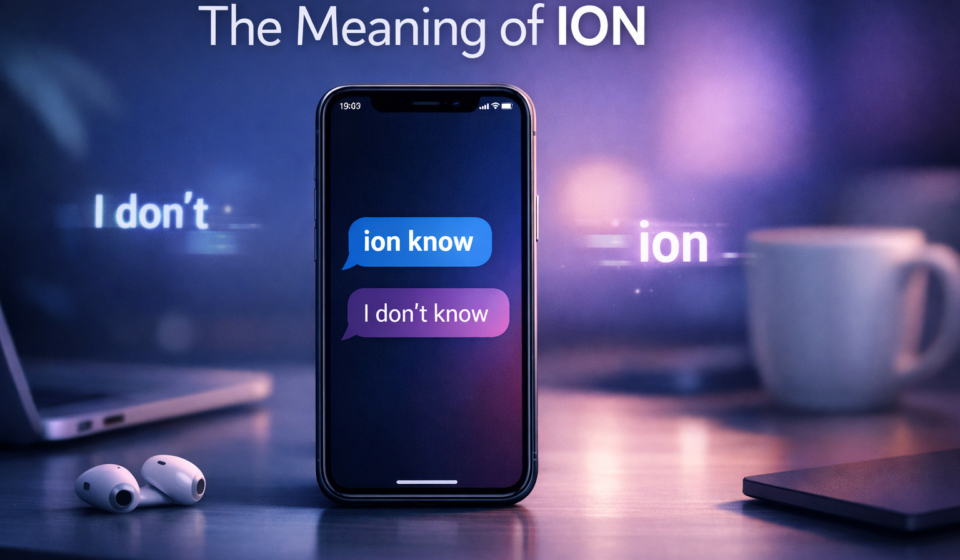
Language is a living, breathing entity that constantly evolves to reflect cultural shifts and communication needs. In our fast-paced digital world, this evolution has accelerated, giving rise to a rich tapestry of online slang and abbreviations. One such expression that has gained significant traction in recent years is ‘ion’ – a compressed way of saying ‘I don’t’ that originated in African American Vernacular English (AAVE) and has since become widespread in digital communication across various platforms.
Table Of Content
- What Does ‘Ion’ Mean in Text?
- Origin and Evolution of ‘Ion’ in Slang
- Usage of ‘Ion’ in Different Contexts
- Expressing Dislike or Disapproval
- Avoidance or Refusal
- Indicating Unawareness or Confusion
- Displaying Emotional Distance
- When Not to Use ‘Ion’
- Appropriate Alternatives to ‘Ion’
- Casual Alternatives
- Neutral / Everyday Conversational Alternatives
- Polite / Professional Alternatives
- How to Choose the Right Alternative
- 15 Effective Ways to Say or Reply to ‘Ion’ (With Context)
- Why It’s Important to Understand These Alternatives
- Final Thoughts
What Does ‘Ion’ Mean in Text?
‘Ion’ is a contracted form of the phrase ‘I don’t.’ When pronounced, it sounds like “eye-yun” – essentially blending the words ‘I’ and ‘don’t’ together into a single syllable. This texting slang has become increasingly popular, particularly among younger generations on social media platforms like Twitter, Instagram, and TikTok.
For example, instead of typing “I don’t want to go to the party,” someone might text: “Ion wanna go to the party.” This shorthand creates a more casual, conversational tone and signals familiarity with contemporary digital language patterns.
Origin and Evolution of ‘Ion’ in Slang
‘Ion’ has its roots in AAVE (African American Vernacular English), a rich and historically significant dialect with distinctive grammatical features, vocabulary, and pronunciation patterns. Like many AAVE expressions, ‘ion’ entered mainstream usage through popular culture, music (particularly hip-hop), and social media.
The journey of ‘ion’ from AAVE to widespread texting slang demonstrates how digital platforms serve as powerful vectors for language evolution. As Black creators gained prominence on platforms like Vine, Twitter, and later TikTok, their linguistic innovations – including ‘ion’ – spread rapidly through viral content.
This linguistic cross-pollination is a testament to the cultural influence of AAVE on contemporary American English and global digital communication. However, it’s important to acknowledge this origin rather than simply appropriating such terms without understanding their cultural context.
Usage of ‘Ion’ in Different Contexts
While ‘ion’ literally means ‘I don’t,’ its usage extends beyond a simple negation. The term can convey various nuanced meanings depending on the context in which it appears. Here are the primary ways ‘ion’ functions in digital communication:
Expressing Dislike or Disapproval
‘Ion’ frequently appears when communicating distaste for something or rejecting an idea:
“Ion like how that movie ended.”
“Ion trust people who don’t season their food.”
In these cases, ‘ion’ creates a casual yet emphatic way to express negative opinions or boundaries.
Avoidance or Refusal
When used to decline invitations or reject suggestions, ‘ion’ conveys a definitive stance:
“Ion wanna go out tonight.”
“Ion need your advice right now.”
This usage is direct and typically understood as a firm but casual rejection.
Indicating Unawareness or Confusion
‘Ion’ can express a lack of knowledge or understanding about a situation:
“Ion know what you’re talking about.”
“Ion even understand how that works.”
This usage indicates confusion or ignorance without the more formal construction of “I don’t know.”
Displaying Emotional Distance
Sometimes ‘ion’ serves to communicate emotional detachment or indifference:
“Ion even care anymore.”
“Ion got time for drama.”
This application of the term helps convey a blasé attitude or emotional boundary-setting in a concise way.
When Not to Use ‘Ion’
Despite its popularity in casual digital communication, ‘ion’ is inappropriate in many contexts. Understanding these boundaries is crucial for effective communication across different situations.
Professional environments: Using ‘ion’ in workplace communications, formal emails, job applications, or professional networking platforms like LinkedIn can create an impression of unprofessionalism or a lack of communication skills.
Academic settings: ‘Ion’ should be avoided in academic writing, classroom discussions, or communications with educators and administrators.
Formal documentation: Legal documents, official forms, business proposals, and other formal paperwork require standard language without slang contractions.
Conversations with unfamiliar individuals: When speaking with people you don’t know well, particularly those from different age groups or cultural backgrounds, using ‘ion’ might create confusion rather than facilitate understanding.
Intergenerational communication: Older adults may not be familiar with this slang term, making its use potentially confusing in cross-generational conversations.
Appropriate Alternatives to ‘Ion’
Having a repertoire of alternatives to ‘ion’ allows for more contextually appropriate communication across different situations. Here are varied options categorized by formality level:
Casual Alternatives
- I don’t – The straightforward, uncontracted original form
- I ain’t – Another casual alternative with similar informality
- Nah – A brief, dismissive negative
- Not feeling it – For expressing disinterest or dislike
- Pass – A concise way to decline
- Hard pass – For emphatic refusal
Neutral / Everyday Conversational Alternatives
- I’m not – A standard negative construction
- I’d rather not – A gentle refusal
- Not for me – A polite way to express disinterest
- I’ll skip this one – A friendly decline
- I’m unfamiliar with – For expressing lack of knowledge
- That’s not my preference – A neutral way to express dislike
Polite / Professional Alternatives
- I would prefer not to – A formal decline
- Unfortunately, I must decline – Professional refusal
- I’m afraid that won’t be possible – Formal boundary-setting
- I’m not particularly inclined to – Expressing polite disinterest
- I’m not familiar with – Professional way to indicate lack of knowledge
- That doesn’t align with my schedule/preferences – Formal decline
How to Choose the Right Alternative
Selecting the appropriate alternative to ‘ion’ depends on multiple factors. This comparison table provides guidance for making context-appropriate choices:
| Factor | Casual Option | Neutral Option | Professional Option |
|---|---|---|---|
| Audience | Close friends, peers | Acquaintances, mixed groups | Colleagues, superiors, clients |
| Medium | Personal texts, social media | Informal emails, group chats | Work emails, formal documents |
| Intent | Express authenticity, connection | Clear communication | Demonstrate professionalism |
| Tone | Relaxed, playful | Straightforward, approachable | Polished, respectful |
The key is to match your language to the communication context. While ‘ion’ might perfectly suit a quick exchange with friends, it would be jarring in a professional email, where “I don’t believe that approach would be effective” would be more appropriate.
15 Effective Ways to Say or Reply to ‘Ion’ (With Context)
Here are specific examples of how to respond to or replace ‘ion’ in various scenarios:
- When declining an invitation: “I appreciate the invitation, but I’ll have to pass this time.” (Professional)
- When expressing lack of knowledge: “I’m not familiar with that topic, but I’d be happy to learn more.” (Neutral)
- When setting boundaries with friends: “Nah, I’m not up for that tonight.” (Casual)
- When refusing a work assignment: “I don’t have the bandwidth to take on additional projects at this time.” (Professional)
- When expressing dislike: “That’s not really my cup of tea.” (Neutral)
- When responding to ‘ion know’ in a text: “No worries! Let me explain…” (Casual)
- When expressing disagreement in a meeting: “I don’t share that perspective for the following reasons…” (Professional)
- When responding to confusion: “Let me clarify that for you.” (Neutral)
- When replying to ‘ion like that’: “What would you prefer instead?” (Casual)
- When expressing disinterest professionally: “I’m focusing my attention elsewhere at the moment.” (Professional)
- When responding to ‘ion care’: “I understand this might not seem important to you, but…” (Neutral)
- When turning down plans with friends: “I’m gonna sit this one out.” (Casual)
- When expressing uncertainty in a professional context: “I don’t have enough information to make that determination yet.” (Professional)
- When responding to ‘ion get it’: “The main point is…” (Neutral)
- When casually expressing dislike: “Not feeling that vibe.” (Casual)
Why It’s Important to Understand These Alternatives
Comprehending the nuances of ‘ion’ and its alternatives is valuable for several reasons:
Cultural literacy: Understanding slang like ‘ion’ and its AAVE roots helps develop cultural awareness and respect for linguistic diversity.
Communication flexibility: Having a range of expressions at your disposal allows you to adapt your communication style to different contexts – from casual texting with friends to formal professional emails.
Career advancement: The ability to code-switch between casual and professional alternatives demonstrates communication intelligence that employers value.
Intergenerational communication: Bridging generational gaps in digital communication requires understanding both contemporary slang and more traditional expressions.
Digital credibility: Using appropriate language for each platform and audience builds your credibility and effectiveness as a communicator in diverse digital spaces.
Final Thoughts
The evolution of ‘ion’ from AAVE origins to widespread texting slang illustrates the dynamic nature of language in our digital age. While this expression provides a concise, casual way to communicate in informal settings, understanding when to use it – and when to opt for alternatives – is essential for effective communication across different contexts.
As digital communication continues to evolve, linguistic adaptability becomes increasingly valuable. By recognizing the cultural roots of expressions like ‘ion’ while developing a versatile communication repertoire, you can navigate both casual and professional interactions with confidence and clarity.
Whether you’re texting friends, posting on social media, or drafting professional correspondence, having a range of options beyond ‘ion’ ensures your message will be received as intended. This linguistic flexibility isn’t just about following rules – it’s about respecting contexts, connecting effectively with diverse audiences, and expressing yourself authentically across the full spectrum of digital communication.